Begin with ordinary objects
Hats, apples, windows, clouds and rooms are often painted calmly; strangeness comes from relation rather than surface distortion.
Complete free archive
Magritte-like Surrealism places ordinary objects in unordinary situations, using calm clear almost advertising-like painting to create philosophical puzzles.
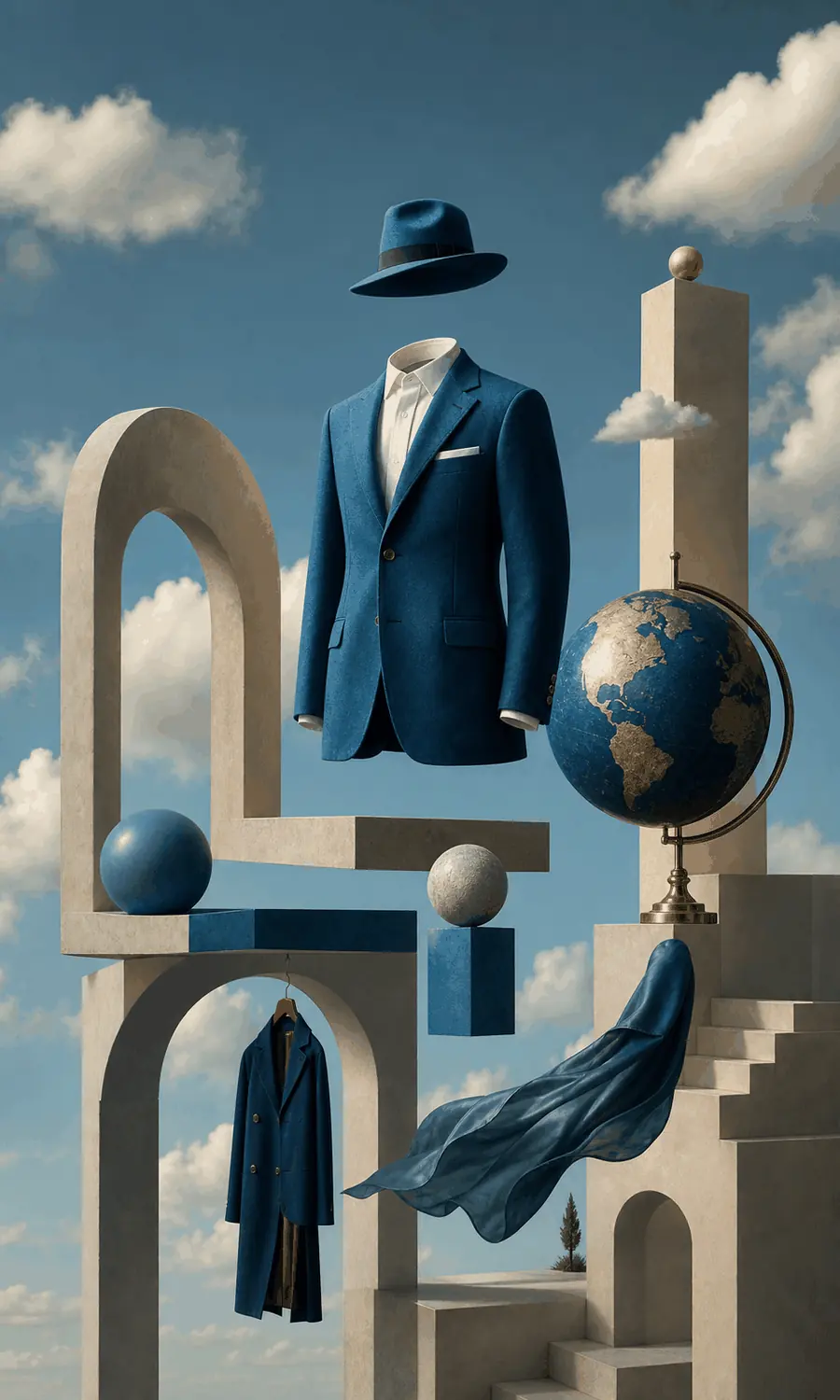
Why has this ordinary object become strange: did its position change, or its relation to words and scale?
Hats, apples, windows, clouds and rooms are often painted calmly; strangeness comes from relation rather than surface distortion.
An object may cover a face, pass through space or sit at impossible scale, making you doubt whether seeing equals understanding.
Titles, sentences or labels may contradict the image before you, and the calmness makes the question sharper.
These are comparative observation levels, not ratings of artistic value or quality.
Ask what in the image should not happen. The answer is often quiet, but it stays in the mind.
He does not rely on violent distortion but on misplaced familiar things. The more ordinary an apple, window, cloud or hat is, the more it becomes a question when placed in the wrong context.
Like a bowler hat, a sky and one wrong sentence gently twisting reality.
Notice how mirrors, doorframes and window views make an ordinary object strange by changing its position.
See how hats, scarves and motifs obscure or replace identity cues without copying symbols from specific works.
Photograph objects covering faces, sky entering interiors or words contradicting images, keeping the question calm.
Look at moments when labels, instructions and objects disagree, and how everyday language changes looking.
Shared qualities: Both break ordinary logic and make familiar objects enter strange relations.
Different choices: Surrealism is the broader movement; Magritte's personal language is calmer, realistic and conceptual, often around words, occlusion and contextual displacement.
Shared qualities: Both use clear depiction to create illogical images.
Different choices: Magritte rarely uses Dali-like softened objects and theatrical dream surfaces; he more often places ordinary things inside quiet, sharp logical questions.
Magritte-like conceptual Surrealism, ordinary object placed in the wrong context, blue sky and white clouds, window and inside-outside paradox, calm realistic rendering, clean composition, visual riddle, original scene, not copying apple-over-face or any specific work
Avoid copying bowler-hat apple-face imagery, direct use of specific compositions, horror nightmare, excessive Dali-like distortion, cheap compositing
Rene Magritte was a Belgian Surrealist who entered the movement in the 1920s. His background in advertising and graphic work helped give his paintings a clear, calm and readable surface, while the relationships between objects question the boundary between image and reality.
Do you rush to solve the puzzle, or let it keep changing your trust in ordinary things?