Begin with cutaway space
Rooms, diners and corners feel cut open for viewing; window frames and walls place figures in clear but enclosed positions.
Complete free archive
Edward Hopper-like light uses empty corners, figures by windows, calm architecture and strong angled light to express quiet loneliness in modern life.
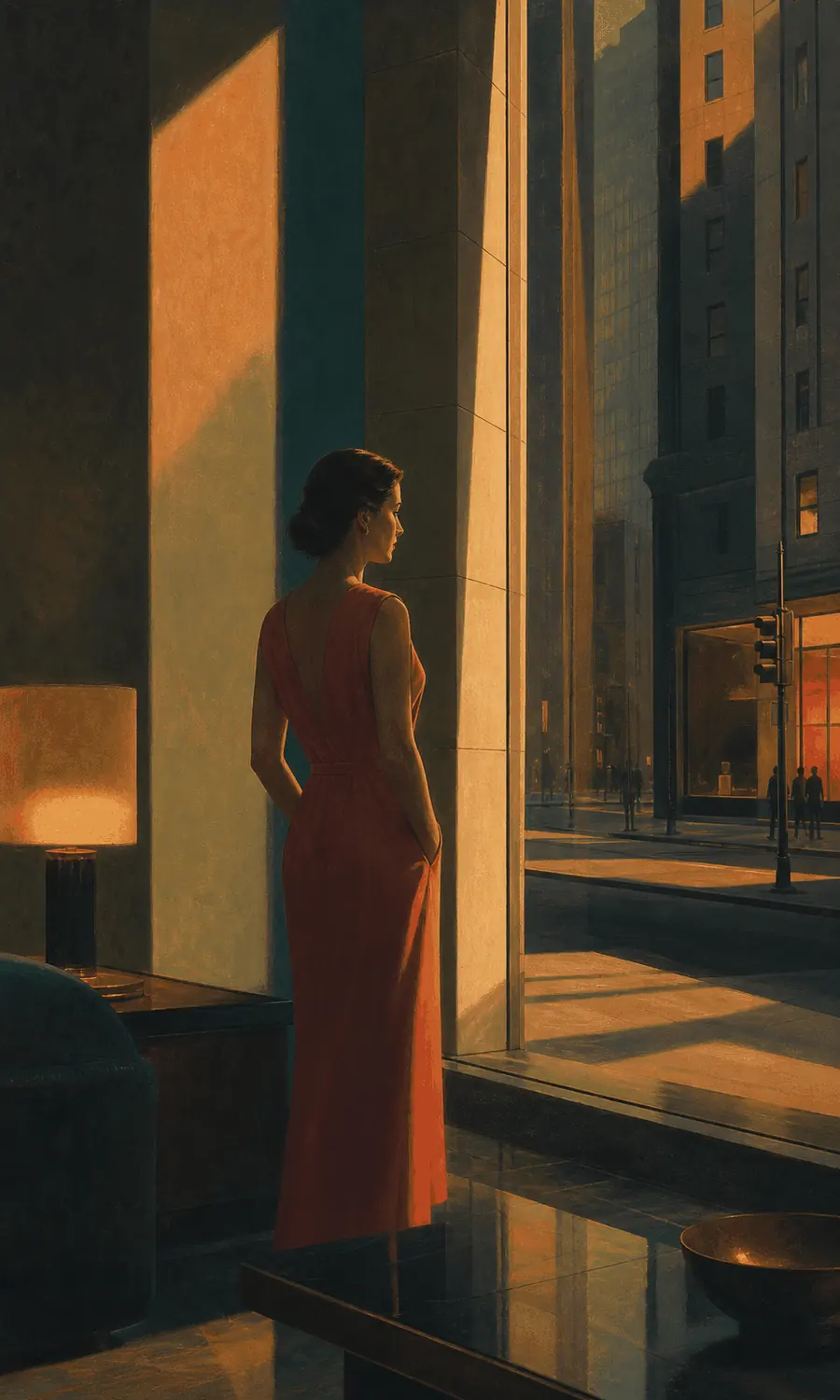
When the figures say nothing, have light, windows and room sections already left a story for them?
Rooms, diners and corners feel cut open for viewing; window frames and walls place figures in clear but enclosed positions.
Figures may be physically close yet separated by tables, window light or gaze direction; this need not mean simple sadness.
Hard daylight, night lighting and broad shadow create narrative gaps, making urban space feel paused.
These are comparative observation levels, not ratings of artistic value or quality.
Do not only look at lonely figures. Watch how light traps people in space. Windows, doors, counters and streets are psychological borders.
His paintings feel quiet because narrative is deliberately reduced. Figures rarely connect, architecture is hard-edged, and light cuts space like stage lighting, leaving viewers to complete the story.
Like a late-night diner with one light left on: people are present, yet separated from the world by glass.
Notice how a chair by a window, light at a doorway or an empty table makes a room feel storied but unfinished.
See how simple silhouette, muted color and posture hold distance within space.
When photographing cafes, stations and night windows, preserve gaps between people and the direction of light.
Look at lamps, blinds, cups and empty chairs leaving traces of use even without figures.
Shared qualities: Both begin from recognizable daily scenes and human relations.
Different choices: Realism is a broader stance toward social and everyday representation; Edward Hopper's language especially relies on cutaway architecture, light, urban space and narrative silence.
Shared qualities: Both may use urban night, stark light and distant figures.
Different choices: Hopper's images are quieter and more open, not necessarily serving crime narrative; Noir Illustration comes more from suspenseful lighting in film and publishing genres.
Edward Hopper-like American realist lighting, empty street corner or night diner, few isolated figures, strong angled light and deep shadow, calm architectural geometry, cinematic still composition, quiet alienation, original scene, not copying Nighthawks or any specific work
Avoid directly copying Nighthawks composition, excessive noir styling, exaggerated expressions, cyber neon, low-quality photo filters
Edward Hopper was a 20th-century American realist painter of New York, hotels, gas stations, cinemas and coastal architecture. In an age of modern cities, automobile travel and commercial spaces, he used pared-down composition to record everyday American alienation.
Are you inventing a story for the figures, or being held by the space and light itself?